PennFuture Navigation

Bear in the Woods: Environmental Law Blog
Showing posts with label Clean Air Act. Show all posts

Wednesday, July 23, 2014

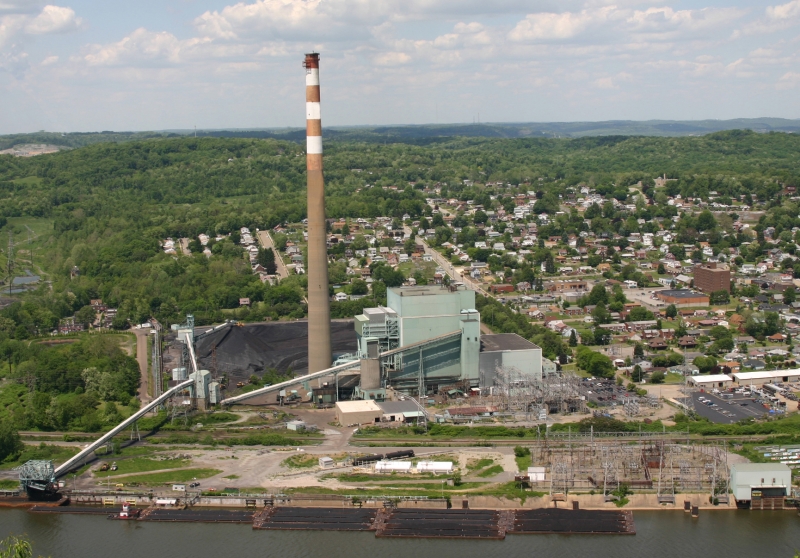
Newest TRI data shows Clairton’s impact on surrounding community

The U.S. Environmental Protection Agency (EPA) just released its preliminary 2013 Toxics Release Inventory (TRI) data for industrial facilities across the United States. The data includes information on U.S. Steel’s Clairton Coke Works in Clairton, Pennsylvania, the country’s largest coke manufacturing plant. The Clairton facility has been in the news the past couple months for its inability to control “pushing emissions” at its new $500 million coke battery (Pittsburgh Post Gazette Article). The TRI data quantifies the toxic emissions coming from the Clairton plant, including toxic air emissions. Below are two tables showing a select number of Clairton’s air emissions. Table 1 shows Clairton’s total greenhouse gas emissions measured in CO2 equivalents, and Table 2 shows major toxic pollutants for 2013.

Table 1. Clairton’s Greenhouse Gas Emissions for 2013
Greenhouse Gas
Total Facility Emissions (CO2e)
CO2
668778
CH4
239
N20
709


There are generally two types of air emissions at the Clairton Plant -- fugitive emissions and stack emissions. Fugitive emissions refer to emissions that do not come from stacks, chimneys, vents, or other controlled openings, whereas stack emissions, as the name implies, come directly from facility stacks. Both types of emissions affect air quality, though fugitive emissions are generally more difficult to control.

Table 2. Clairton’s Major Air Pollutant Data for 2013
Chemical Name
Media
Pounds Released
Ammonia
Fugitive emissions
280,000
Stack Emissions
6,800
Benzene
Fugitive emissions
34,000
Stack Emissions
20,000
Cyanide Compounds
Fugitive emissions
11,000
Stack Emissions
47
Hydrogen Cynanide
Fugitive emissions
24,000
Stack Emissions
2,700
Hydrogen sulfide
Fugitive emissions
260,000
Stack Emissions
26
Lead
Fugitive emissions
37.43
Stack Emissions
19.98
Mercury
Fugitive emissions
2.97

The TRI report also indicates Clairton’s compliance with the federal Clean Air Act. The report states that the plant is in violation of the state implementation plan, as well as National Emission Standards for Hazardous Air Pollutants governing coke batteries and by-product recovery.  The report’s compliance history section indicates a history of non-compliance and a significant violation of the Clean Air Act in May of 2013. One can see from the data that fugitive emissions account for a large amount of toxic air pollutants emitted by this facility.


While the TRI data is not the entire story, it provides an eye-opening look at the significant amounts of toxics emitted by a facility of this type and size. To access the entire toxic emissions data for Clairton, including water emissions, air emissions, compliance records, and waste transport, visit the EPA’s TRI Envirofacts site here (Clairton is the last facility on the list). Background information about TRI and common TRI terms can be found here. 

George Jugovic is chief counsel for PennFuture and is based in Pittsburgh.

Wednesday, June 25, 2014

The Supreme Court, with a hiccup, holds EPA can regulate GHGs from new and modified stationary sources

On Monday, the U.S. Supreme Court issued its much-anticipated decision in Utility Air Regulatory Group v. EPA (UARG). The case embodied another industry challenge to the Environmental Protection Agency's (EPA) attempt to regulate greenhouse gas (GHG) emissions under the Clean Air Act (CAA). It’s often a poor sign for the environment when Justice Antonin Scalia delivers the majority opinion for the Court. In this instance, however, the majority upheld EPA’s authority to regulate GHG emissions under the Clean Air Act. The case did not play out exactly as the federal government had planned, however.

UARG involved challenges to EPA’s attempt to regulate GHGs from major stationary sources of air pollutants (power plants, factories, etc.) after its decision to regulate GHGs from mobile sources was upheld. Justice Scalia joined with the conservative block to rule 5-4 that EPA lacked “standalone” authority under the Clean Air Act to regulate GHG emissions from stationary sources.  He then, however, went on to join with the more liberal block (along with Chief Justice John Roberts and Justice Anthony Kennedy) to affirm 7-2 that EPA could regulate GHG emissions from stationary sources, so long as those facilities otherwise required an air permit for emitting conventional air pollutants. This means that there are now seven justices on the Supreme Court who affirmed that the Clean Air Act covers GHG emission since its 2006 decision in Massachusetts v. EPA.

In the Beginning There Were Mobile Sources

Section 202(a)(1) of the Clean Air Act (CAA), 42 U.S.C. § 7521(a)(1), requires the Administrator of the Environmental Protection Agency to set emission standards for "any air pollutant" from motor vehicles or motor vehicle engines "which in his judgment cause[s], or contribute[s] to, air pollution which may reasonably be anticipated to endanger public health or welfare." In 2003, the Bush Administration’s EPA denied a petition by twelve states (but not Pennsylvania) and several cities to regulate carbon dioxide and other GHGs from motor vehicles under the CAA. EPA took the position that it lacked the authority to regulate GHGs under the CAA, and even if it had the authority, regulation at that time was not consistent with President Bush’s policies to address climate change.

Total US Greenhouse Gas Emissions by Economic Sector
 in 2012 from EPA's Inventory of Greenhouse Gas Emissions
Petitioners brought suit to compel EPA to take action, and in April 2007, Justice John Paul Stevens led a 5-4 majority in Massachusetts v. EPA to reject EPA's argument that the CAA was not meant to cover carbon emissions. The Court said that the Act's definition of "air pollutant" was written with "sweeping," "capacious" language so that it would not become obsolete, and that the EPA could not delay its decision on the basis of prudential and policy concerns. Instead, EPA had to base any inaction on regulating carbon emissions upon a consideration of "whether greenhouse gas emissions contribute to climate change." In dissent, Justice Scalia argued that the Clean Air Act was intended to combat conventional lower-atmosphere pollutants and not global climate change.

Though President Bush issued an Executive Order requiring EPA to use its authority under the CAA to regulate carbon emissions from mobile sources in May 2007, it would not be for another two and one half years (December 2009) before EPA issued its "Endangerment and Cause or Contribute Finding, " which found, as required by Massachusetts v. EPA, that motor vehicle emissions of six GHGs threatened the health and welfare of current and future generations, which set up for the first time the promulgation of federal regulations to control carbon emissions from mobile sources. This led to the establishment of greenhouse gas emission standards under Section 202 of the CAA (the so-called "Tailpipe Rule").

And Then There Were New and Modified Stationary Sources (The Tailoring Rule)

Large stationary sources challenged the Tailpipe Rule because of concern that regulation of GHG emissions from mobile sources would lead to exactly what happened here, that EPA would have to regulate GHG emissions from stationary sources. The CAA says that its permit requirements apply to stationary sources emitting "any air pollutant." The EPA, in 2010, took the position that once the agency found that GHGs were enough to warrant vehicle regulations, the Act's permitting requirements were automatically triggered. Industry argued that the cost of regulating GHGs from stationary sources was so large that the EPA should not have regulated tailpipe emissions. A unanimous D.C. Circuit Court of Appeals, in Coalition for Responsible Regulation v. EPA, rejected this argument, holding instead that the EPA lacked any discretion at all in setting tailpipe emissions once it found that that greenhouse gases endanger public health and welfare.

The D.C. Circuit Court’s ruling cleared the way for EPA to move forward with regulating major stationary sources of GHG emissions. The challenge for EPA, however, was that the CAA defines "Major" as any source that emits 100 tons per year of a regulated pollutant, which only captures large facilities when measuring criteria pollutants, but when measuring GHGs, the same standard would capture thousands of very small sources such as homes and businesses. To avoid this problem, EPA sought to interpret or "tailor" its GHG rule to only apply to sources emitting 100,000 tons per year of GHGs (and existing sources making modifications that would increase emissions by 75,000 tons per year). Industry challenged application of the CAA to stationary sources, and EPA”s attempt to "tailor" the language of the CAA.

Utility Air Regulatory Group v. EPA

In UARG, the Supreme Court reviewed whether EPA’s Endangerment Finding and regulation of GHGs under Section 202 of the CAA triggered regulation of GHGs under EPA’s Prevention of Significant Deterioration (PSD) and Title V permitting programs, and whether EPA properly excluded a great number of those sources from regulation under its Tailoring Rule. It should be noted that while industry tried to again challenge EPA’s Endangerment Finding and setting of GHG standards for motor vehicles, the Supreme Court limited its consideration to whether the agency “permissibly determined that its regulation of greenhouse gas emissions from new motor vehicles triggered permitting requirements under the Clean Air Act for stationary sources that emit greenhouses gases.”

The Court ruled that EPA could not interpret the CAA in a manner that applied its PSD Program to sources emitting solely GHGs, as that would be inconsistent with the CAA’s structure and design, which intended only to impose those burdens on large facilities. The Court also held that EPA improperly attempted to "tailor" the CAA’s unambiguous numerical definitions of "major" source. Nonetheless, the Court said that EPA reasonably interpreted the CAA as requiring sources that required a PSD permit to comply with Best Available Control Technology (BACT) respecting GHG emissions. The CAA requires the application of BACT "for each pollutant subject to regulation" under the Act.

The case is Utility Air Regulatory Group v. Environmental Protection Agency, No. 12-1146.

George Jugovic, Jr. is chief counsel for PennFuture. He is based in Pittsburgh.


Wednesday, June 04, 2014

Where does EPA’s 111(d) authority to regulate carbon emissions from existing power plants come from?

The news has been full of talk this week about the Environmental Protection Agency's (EPA) proposed public health standard to reduce carbon pollution from existing power plants by 30 percent from 2005 levels by 2030. We’ve blogged about it here and here and -- one more -- here. This is an encouraging development in the fight to limit damage from climate change, but where does EPA’s authority come from?

The short answer is that EPA’s authority comes from the Clean Air Act, which establishes a comprehensive federal regulatory regime for managing air pollution. The Clean Air Act was initially enacted in 1963 but has been amended several times since then. Among other things, the Act establishes a system for achieving national ambient air quality standards (NAAQS) for certain air pollutants, and addresses releases of substances designated hazardous air pollutants (HAPs). EPA credits the Clean Air Act with reducing emissions of NAAQS-related pollutants – particles, ground-level ozone, lead, carbon monoxide, nitrogen dioxide and sulfur dioxide – by an average of 72 percent since 1970 while the nation’s economy was more than doubling in size. In addition to domestic air pollution controls, the Clean Air Act has been used as a tool to address global problems, such as implementation of the Montreal Protocol, which has been successful at managing ozone-depleting substances to prevent further damage to the planet’s stratospheric ozone layer.  

To regulate carbon emissions from existing power plants, EPA is proposing to use its authority under Section 111(d) of the Clean Air Act, 42 U.S.C. § 7411(d). That section allows the agency to require each state to submit a plan for achieving performance standards for existing sources of air pollution – in this case, carbon dioxide from power plants. Under its proposed rule, EPA would require each state to submit a plan demonstrating that existing electric power plants would be able to meet a state-specific carbon reduction goal by 2030. If all states meet their goals by 2030, the country as a whole will reduce its carbon emissions by 30 percent from 2005 levels. EPA’s proposed rule allows states a considerable amount of flexibility in deciding how to achieve their targets. For example, states are allowed to achieve emission reductions in a number of ways – both by achieving efficiency within power plants themselves and by using “outside the fence line” techniques that will reduce demand for power from plants that burn fossil fuels. This flexibility will enable states to accomplish the goals EPA has set in a way that is good for both the environment and the economy.

Although EPA’s proposed rule already has generated controversy and, when finalized, may generate litigation, we hope and expect that by the year 2030, the significant reduction in carbon emissions required by yesterday’s proposed rulemaking will be added to the list of accomplishments enabled by the Clean Air Act.

Mike Helbing is staff attorney for PennFuture and is based in Philadelphia.

Wednesday, October 16, 2013

U.S. Supreme Court to Review EPA Greenhouse Gas Permitting Requirements for Industrial Facilities

On Tuesday, the United States Supreme Court agreed to consider challenges to the Environmental Protection Agency's (EPA) application of Clean Air Act permitting requirements to greenhouse gas emissions from stationary sources.

The six petitions for certiorari invited the Court to take up a long list of issues, including the extent of EPA’s authority to regulate greenhouse gas emissions.
The Supreme Court, however, limited its review to a single question: “Whether EPA permissibly determined that its regulation of greenhouse gas emissions from new motor vehicles triggered permitting requirements under the Clean Air Act for stationary sources that emit greenhouse gases.”

Although the Supreme Court’s decision to consider this issue could potentially be a setback for EPA’s ability to regulate greenhouse gas emissions from certain industrial facilities, the limited scope of the Court’s review means that much of the agency’s efforts to curb greenhouse gas emissions will remain unaffected. For example, the Supreme Court is NOT reviewing EPA’s determinations that:

• Greenhouse gases may be regulated as a pollutant under the Clean Air Act;

• Greenhouse gases are a threat to public health (Endangerment Finding); and

• Regulation of vehicle tailpipe pollution is appropriate under the Clean Air Act (Tailpipe Rule).

The sole issue before the Court will be whether EPA’s regulation of greenhouse gases from vehicles automatically triggers permitting requirements for stationary sources under other provisions of the Clean Air Act.

Under the Clean Air Act, any facility considered a “major emitting facility” that undergoes construction or modification must obtain a permit and install the “best available control technology” (BACT) for any pollutant subject to regulation under the Act. 42 U.S.C. § 7475(a). A “major emitting facility” is defined in the Act as a stationary source that may emit a threshold amount of “any air pollutant.” 42 U.S.C. § 7479(1).

EPA interprets “any air pollutant” to mean “any air pollutant regulated under the Clean Air Act.” Thus, under EPA’s reasoning, once EPA began regulating greenhouse gases as air pollutants for new motor vehicles, all stationary sources that had the potential to emit the threshold amount of greenhouse gases would be required to install BACT and apply for a permit.

The D.C. Circuit Court of Appeals considered this issue in its 2012 decision in Coalition for Responsible Regulation, Inc., et al., v. United States Environmental Protection Agency, 684 F.3d 182 (D.C. Cir. 2012), and upheld EPA’s interpretation of the Clean Air Act, holding that the text of the statute was unambiguous and "compelled" EPA’s interpretation. The Supreme Court will now review this aspect of the decision. Oral arguments are likely to be held in early 2014, and a decision is expected by June 2014.

Although the Court’s decision to review this single issue is concerning, it is important to recognize that, regardless of the outcome of the Supreme Court case, important programs for reducing greenhouse gas emissions will remain in place.

Wednesday, August 28, 2013

Third Circuit Preserves Common Law Nuisance Claims To Correct Harmful Air Emissions

Counsel for property owners residing near dirty coal plants will be pleased with the Third Circuit's decision in Bell et al. v. Cheswick Generating Station, Genon Power Midwest, L.P., No. 12-4216 (3d Cir. Op. filed Aug. 20, 2013). The Third Circuit held that the federal Clean Air Act does not pre-empt state law nuisance claims.

Plaintiffs Bell and Luppe were named plaintiffs in a class action representing 1,500 persons residing near Genon's 750-megawatt coal-fired power plant located in a bedroom community north of Pittsburgh along the Allegheny River.  The community, Springdale, also happens to be home to one of the finest old-fashioned custard stands east of the Mississippi.
Genon Power Plant
Springdale, Pa.

Plaintiffs sued under a variety of state law tort theories, alleging that ash and other contaminants from the plant were harming their property. Genon sought summary judgment, asserting that the Clean Air Act (CAA) pre-empted the state law claims.

The CAA's citizen suit provision contains a savings clause that reads:
"Nothing in this section shall restrict any right which any person (or class of persons) may have under any statute or common law to seek enforcement of any emission standard or limitation or to seek any other relief (including relief against the Administrator or a State agency)."
The CAA also contains a so-called "state's rights" savings clause that protects the right of states to impose limits that are more stringent than federal law.

In a matter of first impression, the Third Circuit's analysis was guided by the Supreme Court's decision in International Paper Co. v. Ouellette, 479 U.S. 481 (1987).  There, property owners on a lake sued under state common law theories for reduced property values being caused by a pollutional discharge into the lake.  The Supreme Court found that the Clean Water Act's (CWA) savings clauses preserved the right of states to impose standards that were more stringent than federal law, and that those more stringent standards could be imposed either by statute or through the common law.

Finding no meaningful difference between the savings clauses under the CAA and CWA, the Third Circuit properly concluded that Ouellette controlled its decision and remanded the case to the district court for further proceedings.

The CAA's national ambient air quality standards are intended to protect public health and welfare. The secondary standards, in particular, are designed to prevent impacts to things such as buildings.  As a practical matter, compliance with those standards should shield good operators from these types of common law nuisance suits. But the Third Circuit recognized that the principles of cooperative federalism embodied in the CAA provide plaintiffs another tool to redress harm where the federal regulatory framework fails to prevent harm to local residents, as alleged in this case.

In Pennsylvania, the General Assembly has made it difficult for the state to adopt regulatory standards that are more stringent than federal law. Section 4.2(b) of Pennsylvania's Air Pollution Control Act prohibits the Environmental Quality Board from adopting control measures and other requirements that are more stringent than federal law without substantial justification. As such, the Third Circuit's decision preserving common law nuisance claims has particular import for Pennsylvania residents allegedly being harmed by air pollution.